
Map of the Sonoran Desert Courtesy of the Arizona-Sonora Desert Museum Sonoran Desert Digital Library
Tubb Canyon Bajada
Where is Tubb Canyon Bajada and what makes it special?The great Southwestern Sonoran Desert of North America extends from central and southern Arizona southward into northern Sonora and the Baja California peninsula of Mexico, and westward into the Anza-Borrego Desert of southeastern California. It is in southeastern California that the Anza-Borrego Desert, part of the driest Colorado Desert subdivision, comes to its far western end, terminating in the higher elevations of the Peninsular Range mountains. It is in this geologically active transition zone between foothills and desert that Tubb Canyon and its biodiverse, boulder strewn hills and ocotillo-covered bajada exist. Tubb Canyon Bajada is located at the confluence of Tubb, Culp, Dry and Loki Canyons where predominantly granitic sediments have accumulated to form a vegetated bajada fed by surface and underground water from higher elevations.
The Peninsular Range prevents most of the moisture that evaporates off the ocean to the west from reaching the Anza-Borrego Desert. However, mountain springs, streams, and rain clouds that barely extend over Tubb Canyon Bajada provide higher amounts of water to canyon outflows and desert arroyos than is found farther east in the deep desert and badlands. As a result, vegetation is more lush on the bajada, including ironwood and palo verde trees, mesquite, and ancient forests of ocotillos near the base foothills and mouths of local canyons.
This region is home to several rare and endangered species, including Peninsular Bighorn Sheep as well as numerous other desert and foothill plants and animals. The transition zone between Sonoran Desert and foothill chaparral supports great biodiversity. Certain species hybridize in this transitional corridor where vegetation types overlap, such as the desert Gambel's Quail that can interbreed with its close relative, the California Quail... or the Desert Horned Lizard that sometimes hybridizes with its cousin, the Flat-tailed Horned Lizard. These "intergrade" populations are unique and potentially future species in the making.
The slightly wetter transition habitat on Tubb Canyon Bajada also encompasses the westernmost complex of Sonoran desert sand dunes, home to numerous lizard species and an attractive hunting ground for a resident population of Burrowing Owls. The entire region attracts a variety of migrating birds to its water sources and rich vegetation, including several species of hummingbirds, Swainson's Hawks, and orioles. Bats roost within local cliff cracks and small caves, flying out at night to feed on insects around springs and seasonal water sources. The full spectrum of species living within the region has not been fully documented and merits further study.
Geology of the Tubb Canyon
Geology of the Tubb Canyon 7.5' Quadrangle, Anza-Borrego Desert, Eastern San Diego County, CaliforniaExcerpt below published in January 2009, based on a report by David L. Wagner from data compiled 1996-1997.
The Tubb Canyon Quadrangle lies (mostly) within the Anza Borrego Desert State Park. The geologic mapping of Tubb Canyon was part of the Department of Parks and Recreation General Plan Inventory of Natural Features of the Anza Borrego Desert. Cretaceous granitic rocks of the Peninsular Ranges Batholith and prebatholithic metamorphic rocks of uncertain age underlie most of the quadrangle. These rocks are exposed primarily in the upland areas.
The lowlands, Borrego Valley, Yaqui Flat, Yaqui Meadows, and Grapevine Canyon, are underlain by mostly granitic detritus including silt, sand, and gravel eroded from the surrounding uplands. Major structural features of the quadrangle are the Borrego Shear Zone and the San Felipe Fault Zone. The Borrego Shear Zone is believed to represent deformation that occurred during emplacement of granitic rocks of the Peninsular Ranges Batholith in Cretaceous time some 90 to 100 million years ago. Some deformation may have also occurred during the opening of the Salton Trough in Miocene time, 10 to 20 million years ago.
The San Felipe Fault Zone traverses the southern part of the quadrangle in Yaqui Flat. It is a complex zone of many faults and appears to have had both right lateral and vertical displacement. Although the San Felipe Fault Zone may have been active as recently as 500,000 years ago, it does not appear to have a significant potential for generating an earthquake.
Landslides are conspicuous geologic features in the area covered by the Tubb Canyon Quadrangle. Several different types of landslides have been occurring over the past several million years. There are huge ancient landslides mapped on the steep slopes of Pinyon Ridge. Planar zones of weakness, formed during the deformation that formed the Borrego Shear Zone, are parallel to slopes above Borrego Valley.
Courtesy of the California Environmental Information Clearinghouse (CEIC)
Desert Landscape Gallery
-
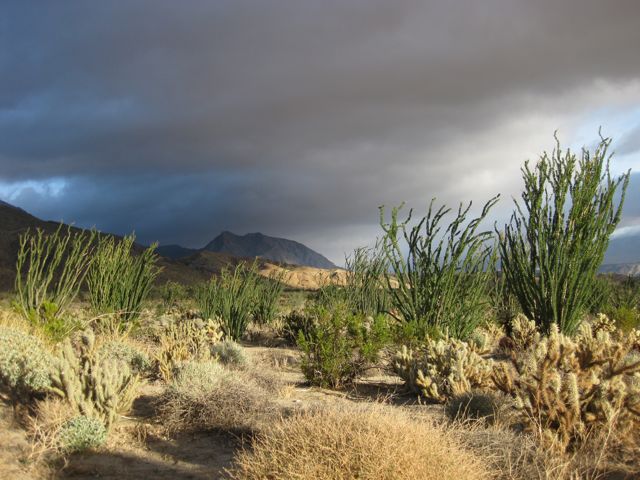
RED November 2010 thunderstorm brewing over Tubb Canyon Bajada at dawn. -
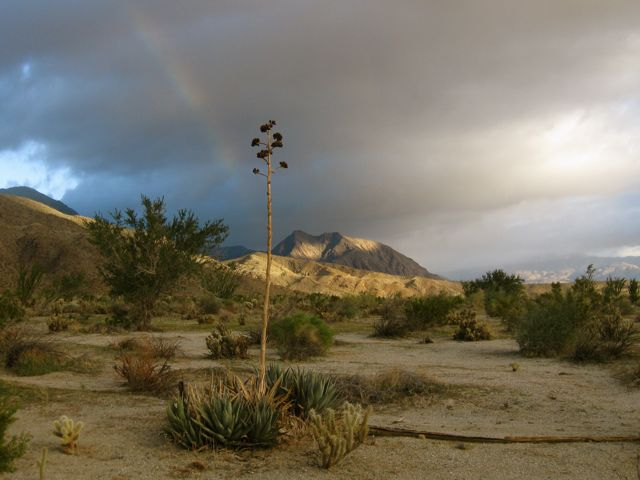
Anza-Borrego Desert rainbow at dawn just before a winter thunderstorm in November 2010 with a Desert Agave (Agave deserti) seed stalk in the foreground and Indian Head Peak in the center background. -
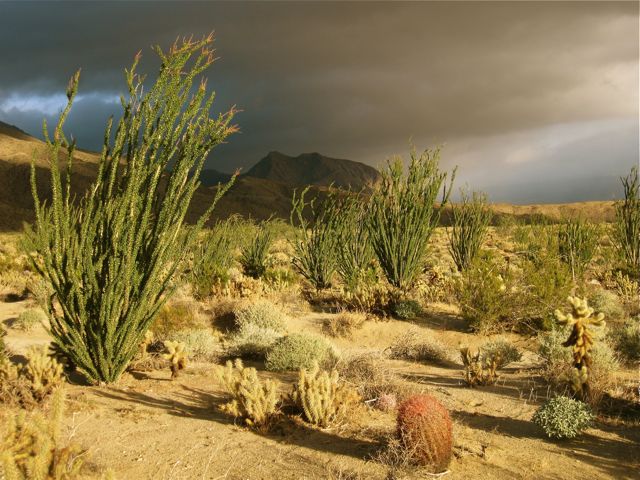
First dawn light with a spring thunderstorm over Indian Head Peak to the north. -
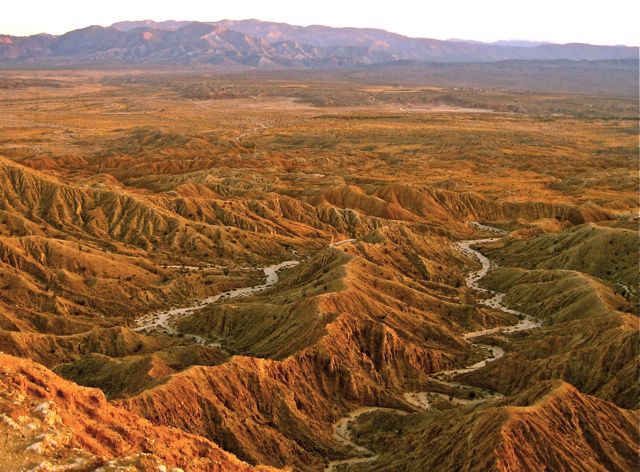
Borrego Badlands at sunset looking southward from Font's Point. -
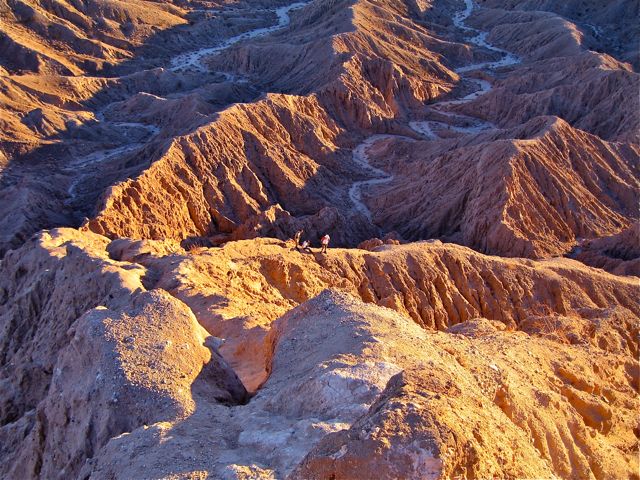
Hikers on a ridge in the Borrego Badlands as seen from Font's Point near sunset. -
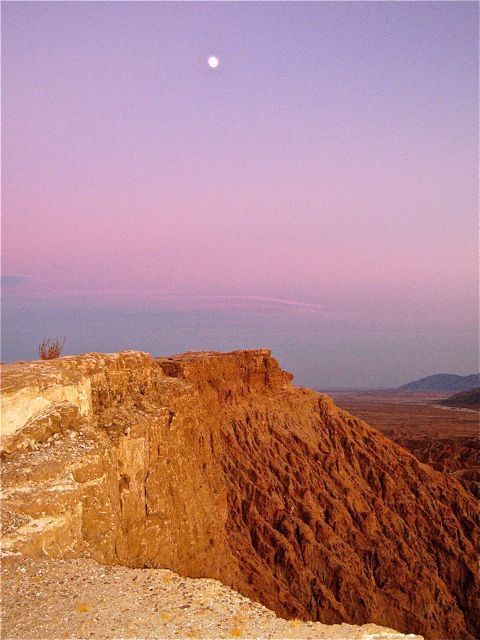
Moonrise over Font's Point just after sunset. -
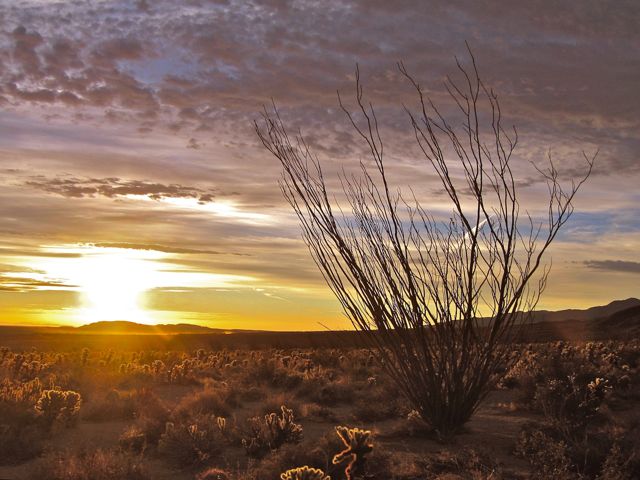
Sunrise on Tubb Canyon Bajada. Beyond the mountains on the eastern horizon one can barely see a line of mountains just across the California border in Arizona. -
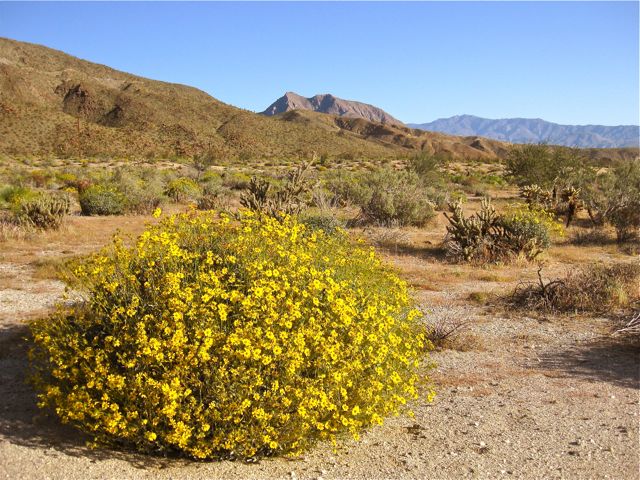
Blooming Brittlebush (Encelia farinosa) in the foreground with Indian Head Peak to the north in the background. -
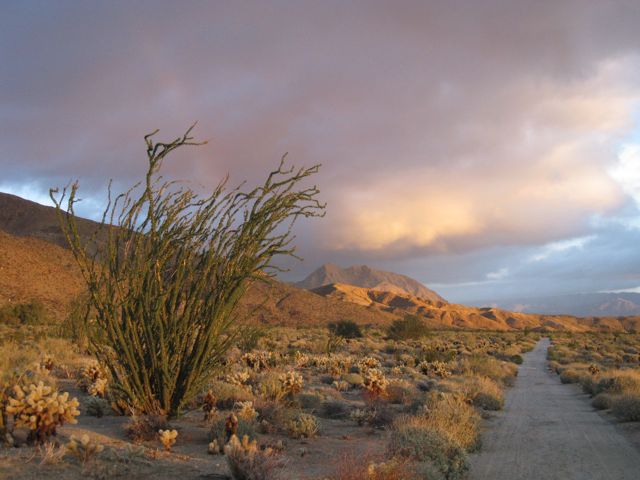
Morning storm with a faint rainbow and Indian Head Peak in the distance. -
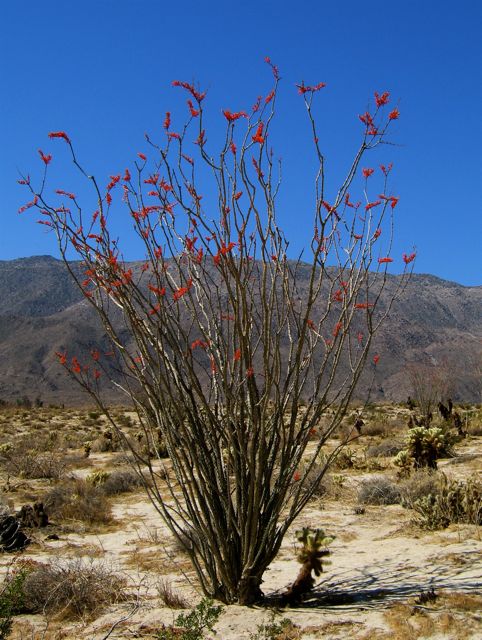
Ocotillo (Fouquieria splendens) in bloom. -
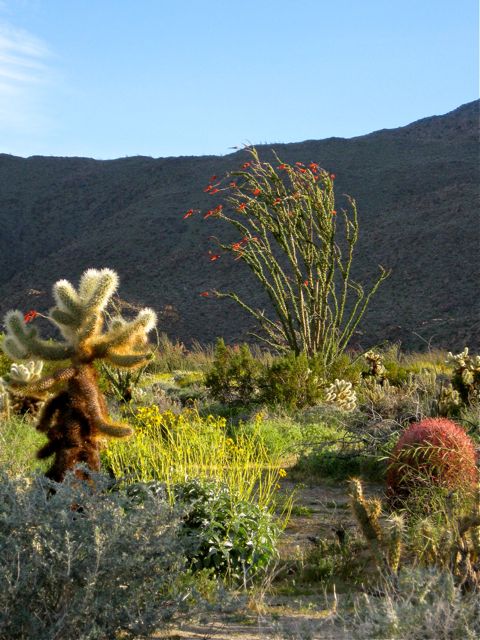
Teddy Bear Cholla, yellow-blooming Brittlebush, red-blooming Ocotillo and red-spined Barrel Cactus on Tubb Canyon Bajada at sunset, March 2011, with the Pinyon Mountains in the background. Note the seed stalks of invasive Sahara Mustard highlighted in front of the Barrel Cactus. That weed was pulled after this photo was taken! -
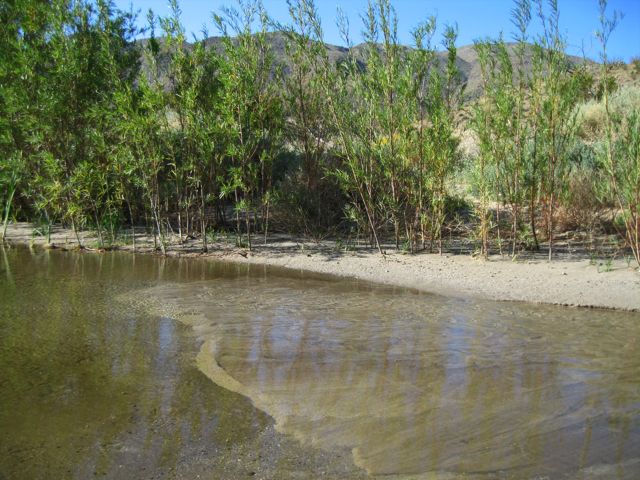
Slender Willows (Salix exigua) growing along shallow Coyote Creek.
Wildflowers and Desert Plants
-
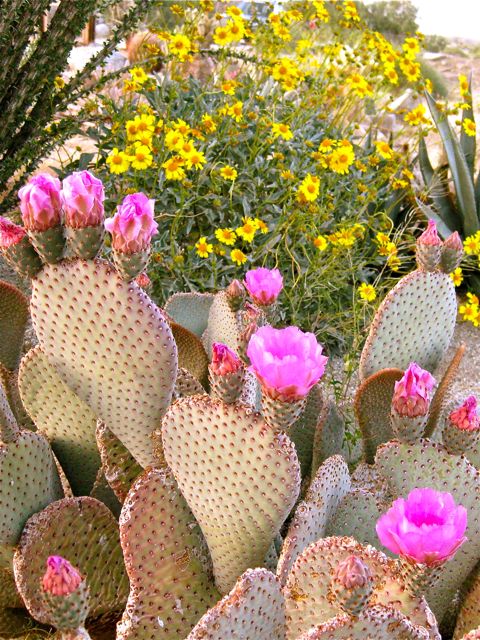
Beaver-tail (Opuntia basilaris) desert roses with yellow Brittle Bush (Encelia farinosa) in the background. -
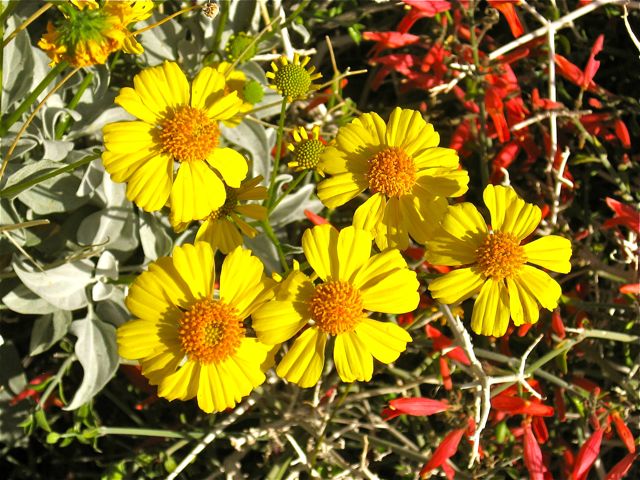
Brittle Bush (Encelia farinosa) flowers up close with red Chuperosa flowers (Justicia californica) in the background. -
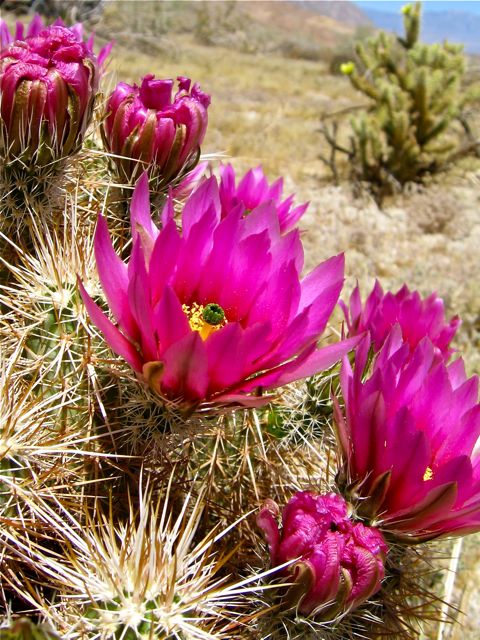
Hedgehog Cactus (Echinocereus engelmannii) on Tubb Canyon Bajada -
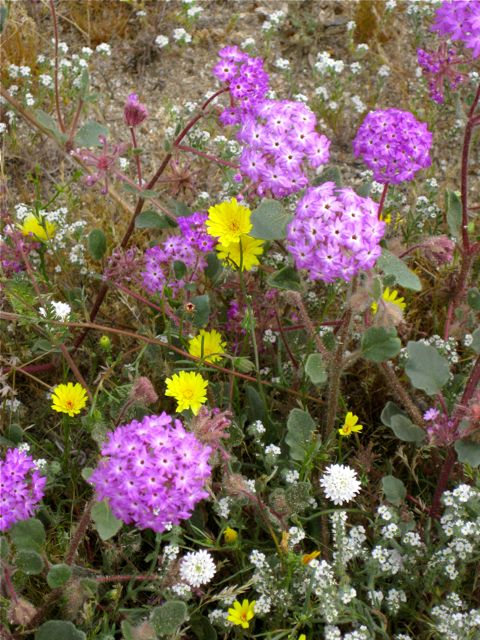
Purple Desert Sand Verbena (Abronia villosa) with yellow Desert Dandelions (Malacothrix glabrata) and white Desert Pincushion (Chaenactis artemisiifolia). -
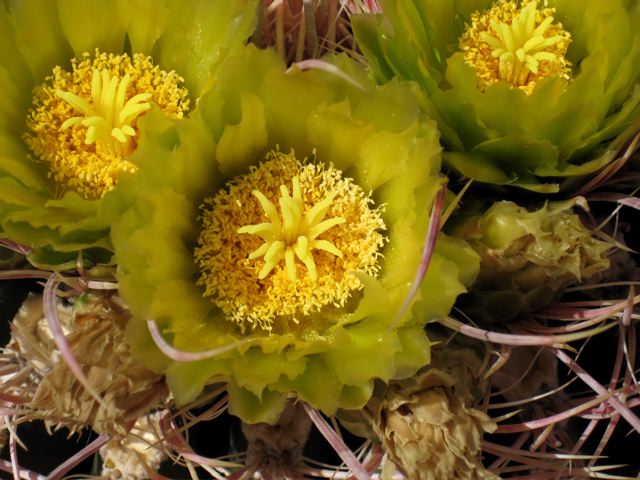
Barrel Cactus (Ferocactus cylindraceus var. acanthodes) flowers -
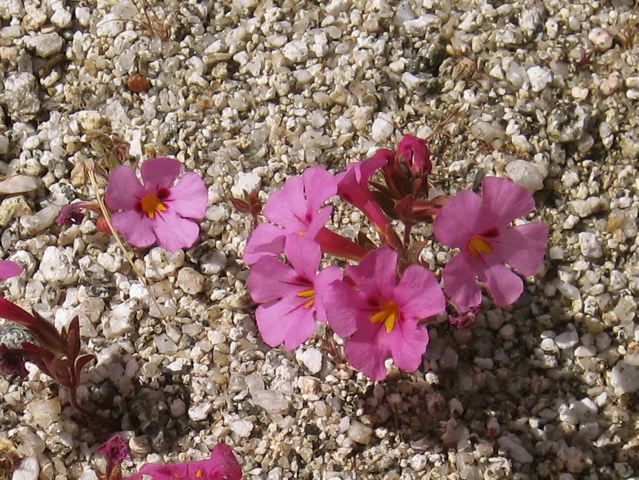
Bigelow Monkey Flower (Mimulus bigelovii). These flowers are less than half an inch across and spring up in gravelly washes after rain. -
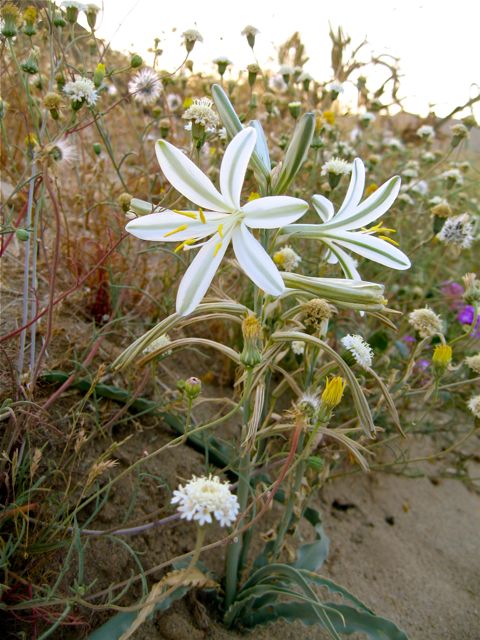
Desert Lily (Hesperocallis undulata) taken on a cloudy day. -
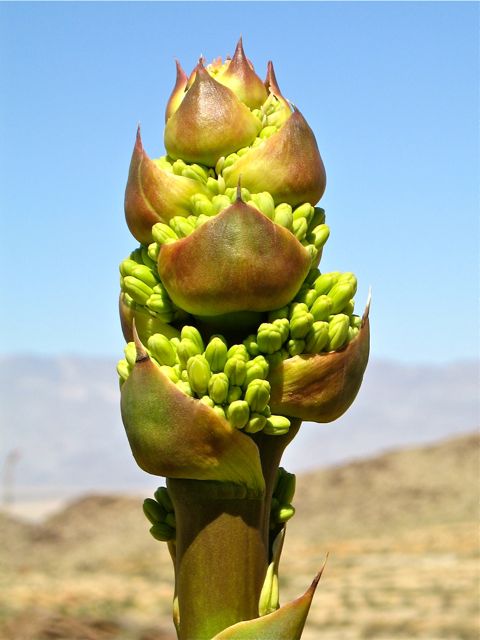
Desert Agave (Agave deserti) flower buds. (Photo courtesy of Robert Staehle) -
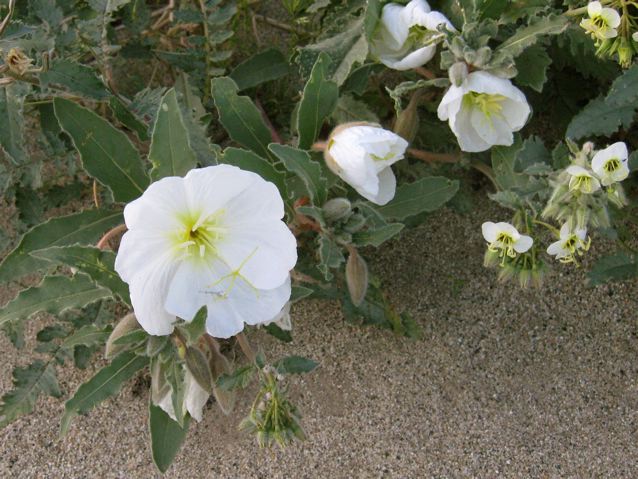
Dune Evening Primrose (Oenothera deltoides) in a sandy wash at sunset with smaller Brown-eyed Primoses (Camissonia claviformis) on the right. -
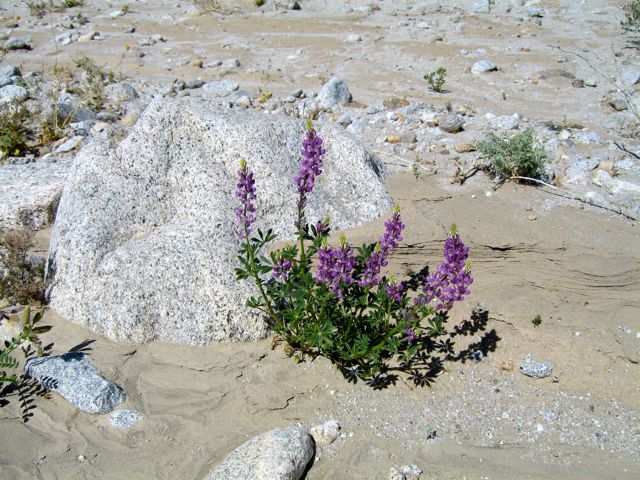
Arizona Lupine (Lupinus arizonicus) in Split Canyon, Anza-Borrego Desert State Park -
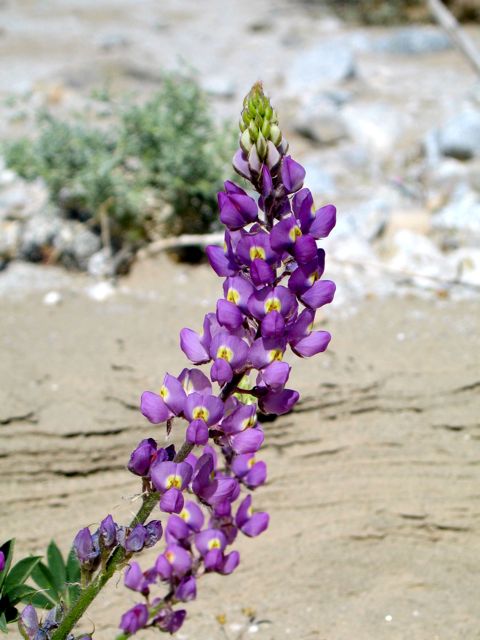
Arizona Lupine (Lupinus arizonicus) flower stalk. Arizona lupines are often found growing among granite boulders at the edge of sandy desert arroyos. -
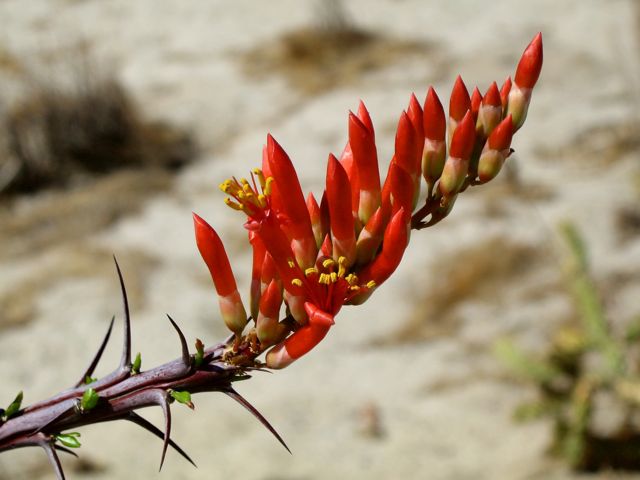
Close up of Ocotillo blossoms (Fouquieria splendens), which attract hummingbirds and other nectar feeders. -
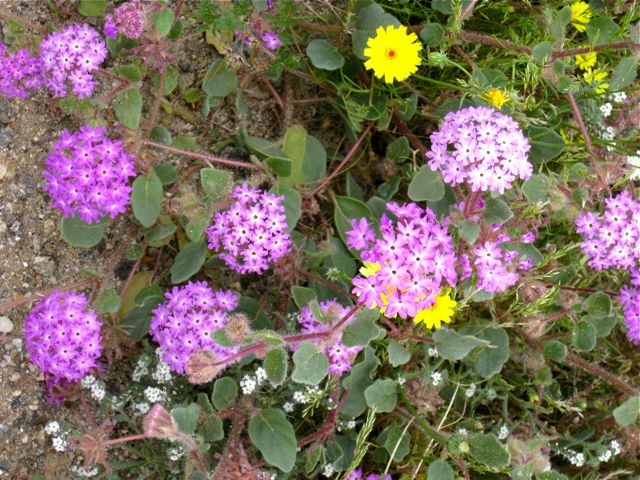
Sand Verbena (Abronia villosa) with red-eyed yellow Desert Dandelions (Malacothrix glabrata). -
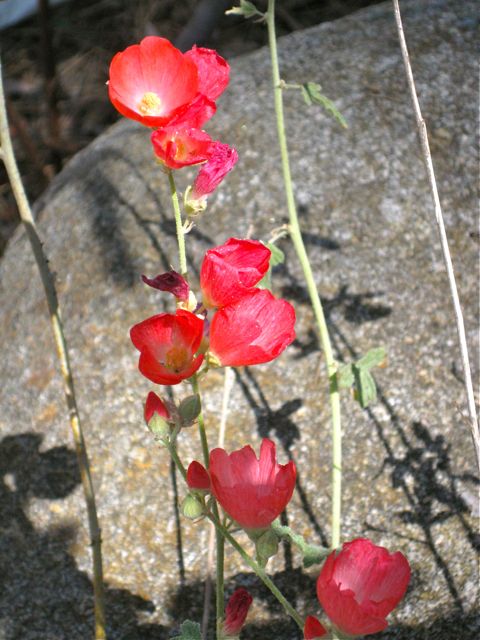
An unusual, vivid pink variant of the usually salmon orange Desert Mallow (Sphaeralcea ambigua). -
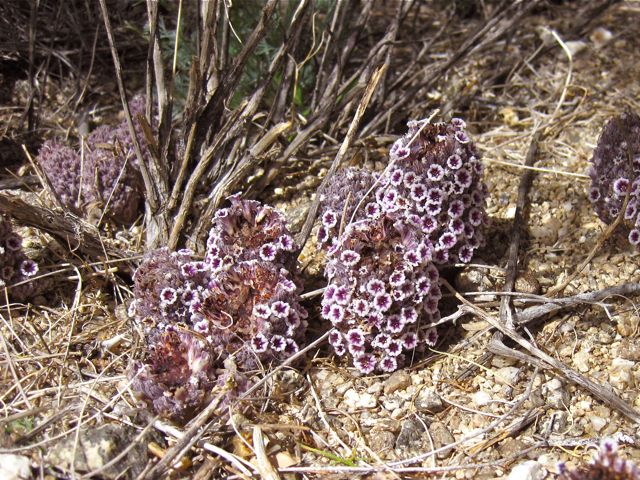
The strange, parasitic Sand Flower (Pholisma arenarium) looks like it might have come from outer space. These fleshy flowers stalks pop up from a large, underground stem next to a host plant, often a small shrub. -
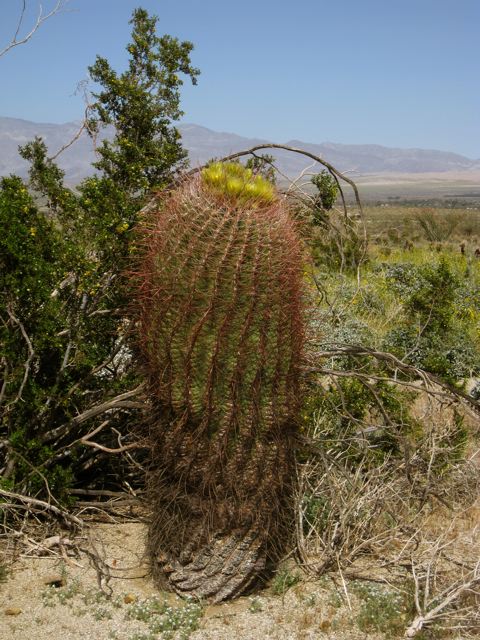
Barrel Cactus, also known as the Compass Cactus (Ferocactus cylindraceus var. acanthodes). This individual is over 4 feet tall and may be over a century old. -
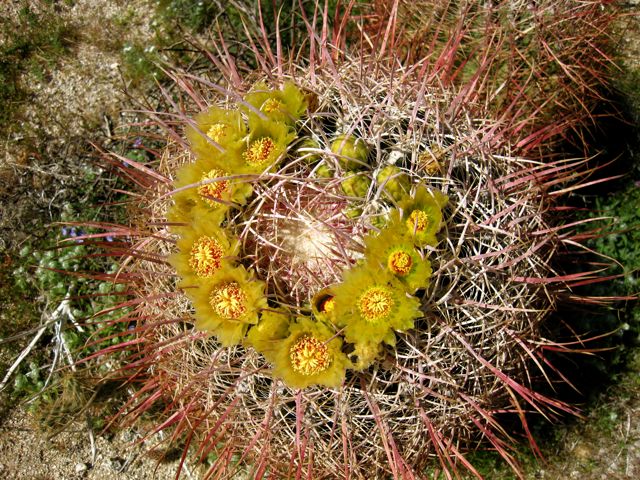
A partial crown of yellow flowers decorates the top of a very thorny Barrel Cactus (Ferocactus cylindraceus var. acanthodes). -
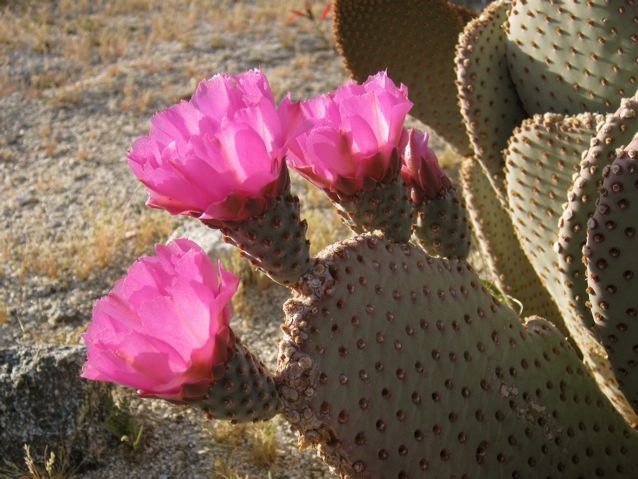
Beaver-tail Cactus (Opuntia basilaris) backlit by the rising Sun. -
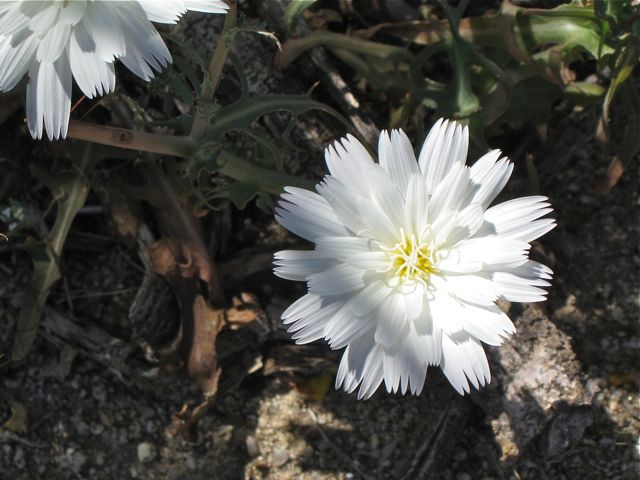
Luminous white Desert Chicory (Rafinesquia neomexicana) often thrives in the cool shadows of desert shrubs. -
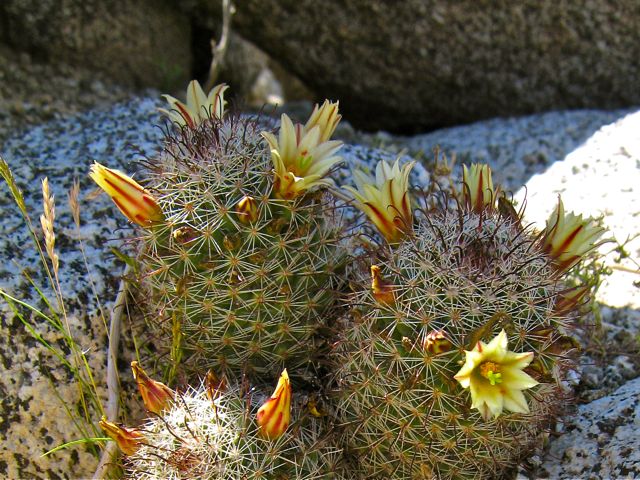
The petite California Fishhook Cactus (Mammillaria dioica) with its tiny flowers can be found tucked among boulders and protected under the partial shade of desert shrubs. -
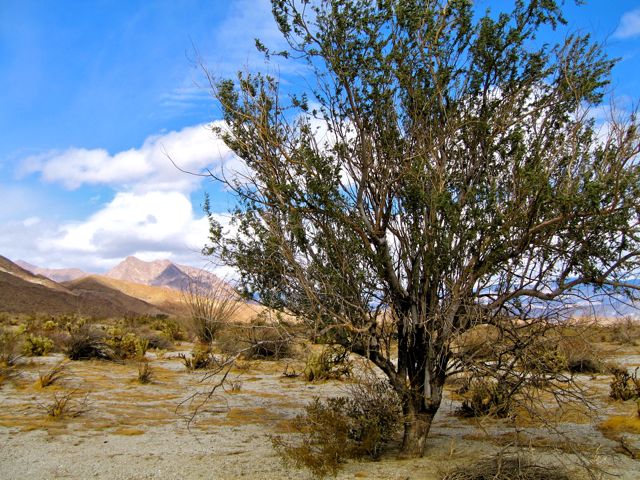
The Desert Ironwood (Olneya tesota) is a small desert tree that remains green even during hot summer months. After rain, it produces clusters of lovely, lavender to dark purple blossoms.
Desert Wildlife
-
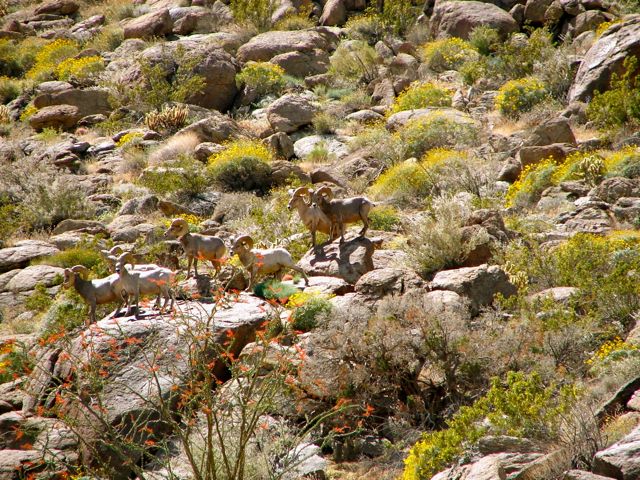
Look close to see 7 endangered Peninsular Bighorn Sheep (Ovis canadensis ssp. nelsoni) among the wildflowers and boulders. (Photo courtesy of Ann Irwin) -
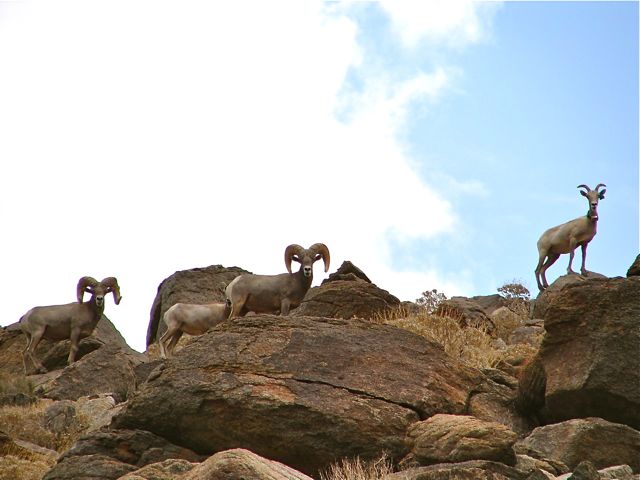
Endangered Peninsular Bighorn Sheep (Ovis canadensis ssp. nelsoni) in Tubb Canyon. The ewe (female bighorn) on the right is wearing a tracking collar around her neck. (Photo courtesy of Ann Irwin) -
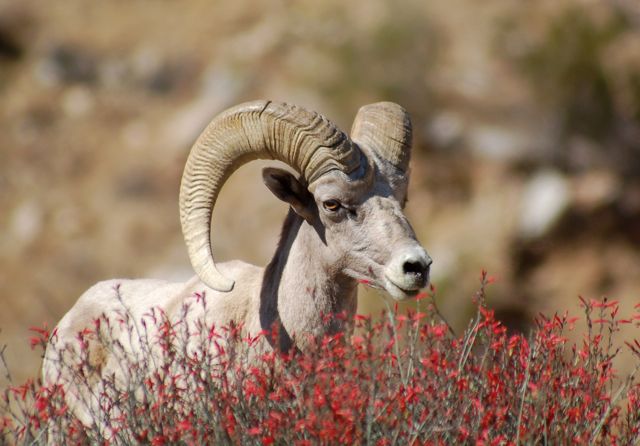
The endangered Peninsular Bighorn Sheep (Ovis canadensis ssp. nelsoni) is found in canyons and on rocky slopes in the Anza-Borrego Desert. This ram is standing behind red Chuperosa (Justicia californica) flowers. (Photo courtesy of Thad McManus) -
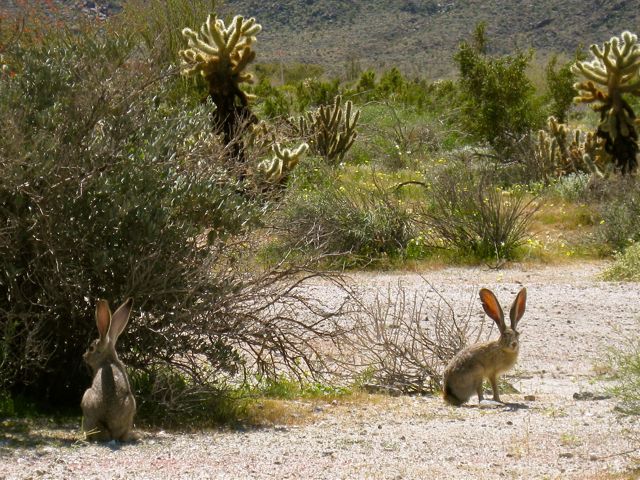
Black-tailed Jackrabbits (Lepus californicus) on Tubb Canyon Bajada. -
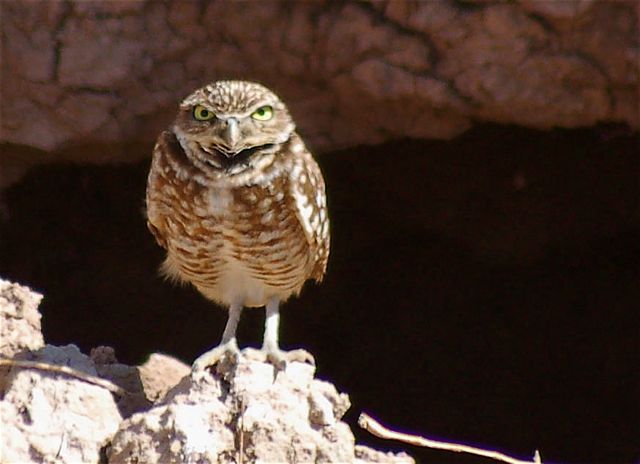
Tiny Burrowing Owls (Athene cunicularia) appear to be frowning; however, this is merely the feather pattern on their face. Burrowing owl populations are in serious decline across their range in California, including desert regions. (Photo courtesy of Thad McManus). -
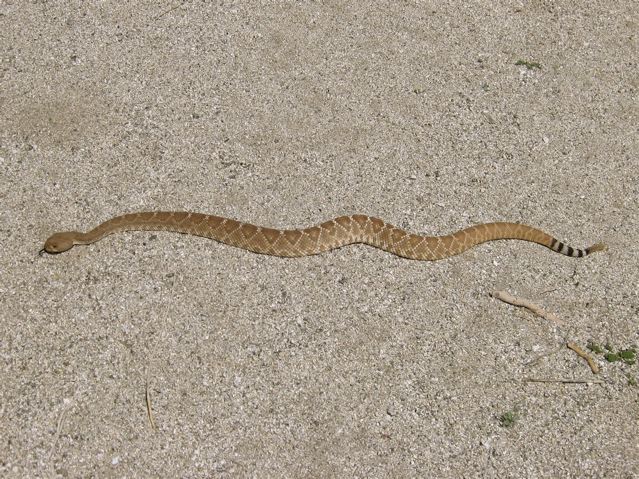
Red Diamondback Rattlesnake (Crotalus ruber) basking in the morning sun in a sandy wash near Tubb Canyon. -
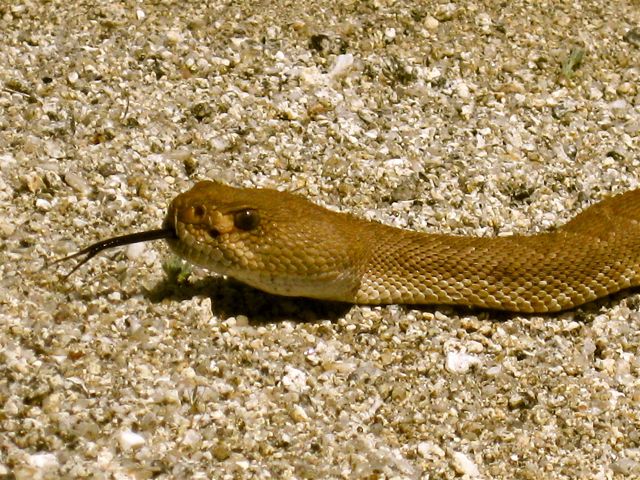
Red Diamondback Rattlesnake (Crotalus ruber) -
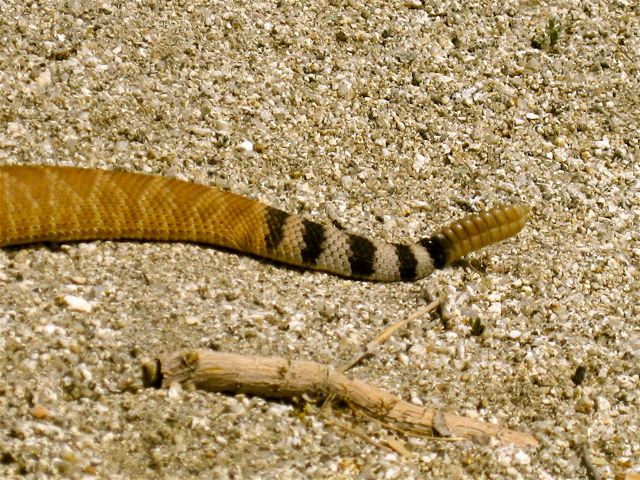
The zebra-striped tail of a Red Diamondback Rattlesnake (Crotalus ruber). -
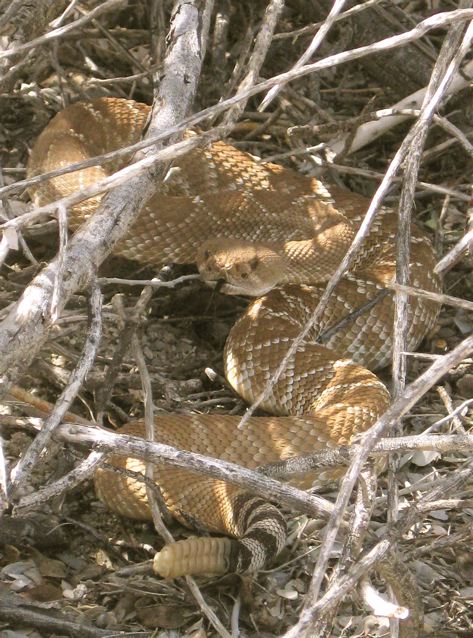
Though this Red Diamondback Rattlesnake (Crotalus ruber) appears to be in a defensive strike posture, the snake is actually relaxing in the cool shade with its chin propped on a branch. -
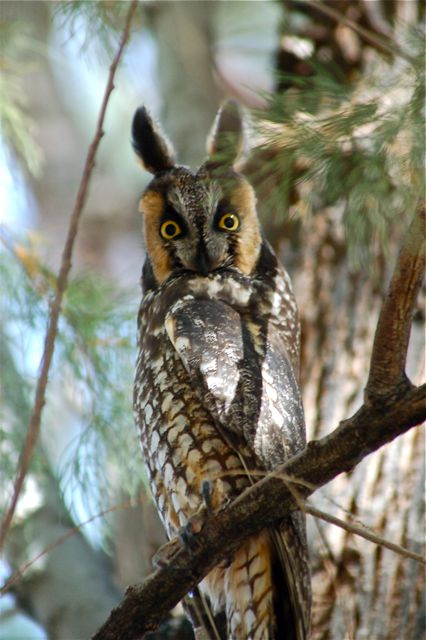
A startled Long-eared Owl (Asio otus, previously Strix otus) with its tuft feathers (ears) raised. (Photo courtesy of Thad McManus). -
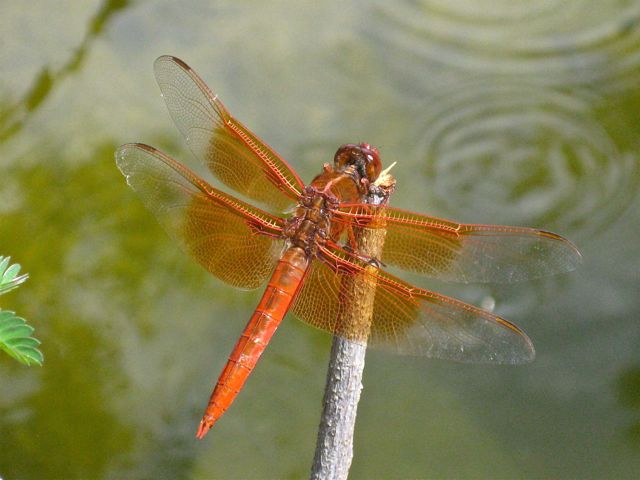
Flame Skimmer Dragonfly (Libellula saturata) -
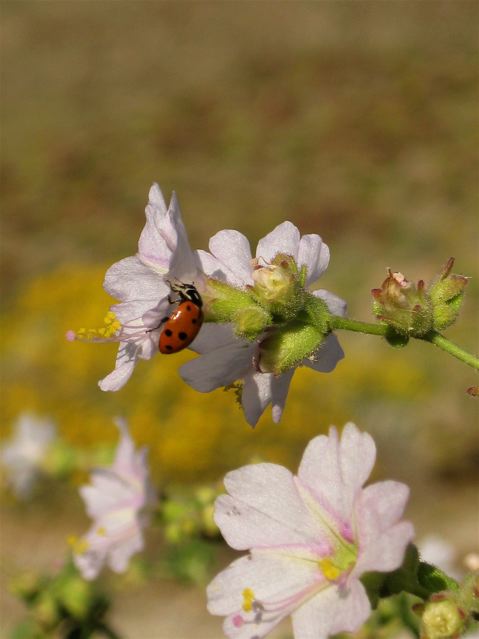
A Convergent Lady Bug (Hippodamia convergensat) at dawn on a wildflower. -
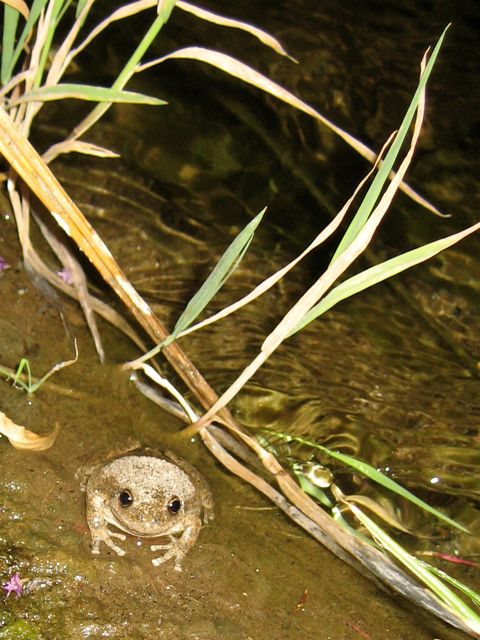
California Tree Frog (Pseudacris cadaverina) at the edge of Coyote Creek. -
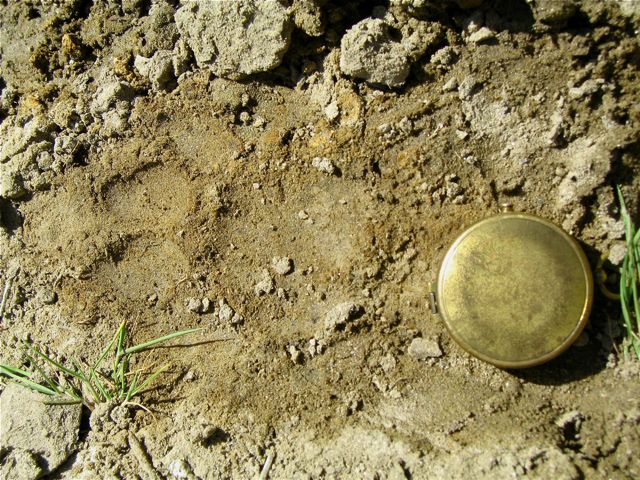
Cougar (Puma concolor) paw print in the wet sand along Coyote Creek with a 2 inch (50mm) in diameter compass for scale. -
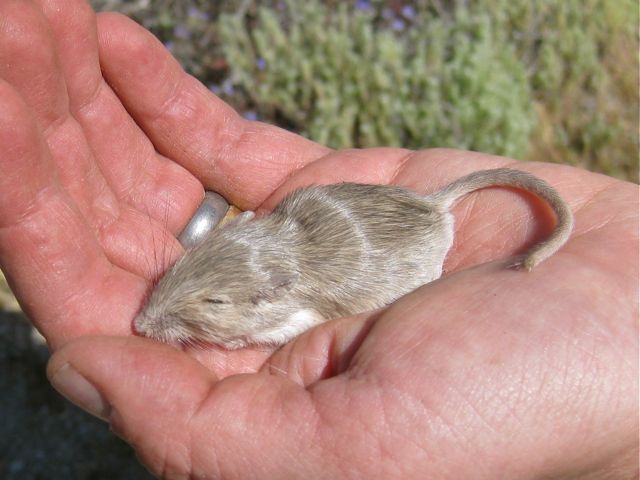
California Pocket Mouse (Chaetodipus californicus) These shy little rodents are common in the Anza-Borrego Desert. They can hop on their hind legs in a similar way to their larger cousins, the kangaroo rats, but they are much smaller. They are important prey for snakes, bobcats and coyotes, as well as owls and other birds of prey. -
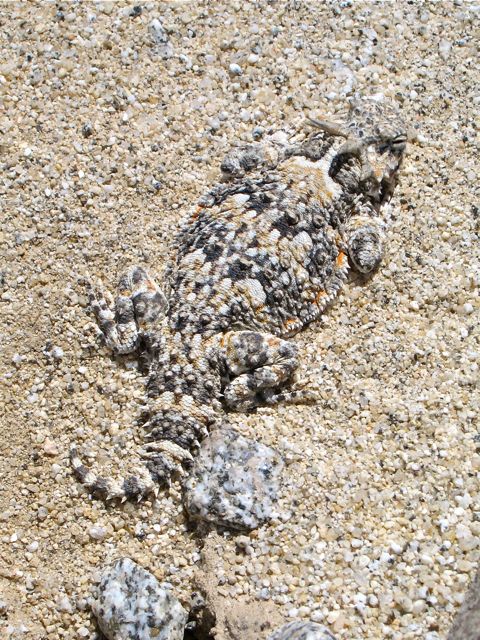
Southern Desert Horned Lizard (Phrynosoma platyrhinos calidairum), also known as a Horny Toad, though this is a lizard (reptile) and not a toad (amphibian). These harmless lizards are seldom seen because their cryptic coloring camouflages them so well against sand and gravel. Ants are their primary prey. -
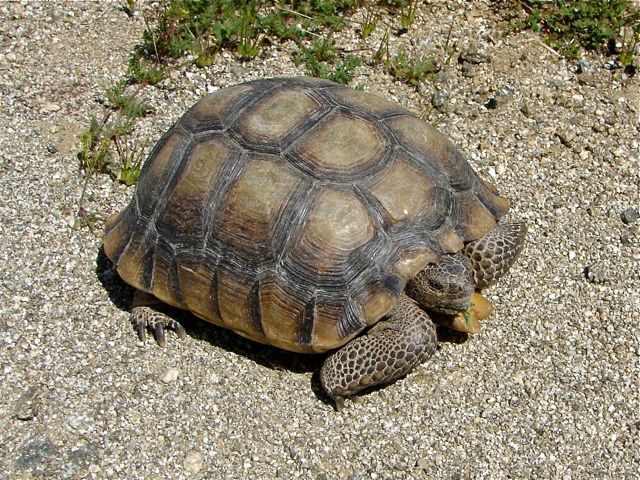
Desert Tortoises (Gopherus agassizii) depend upon annual plants, cacti, and other native vegetation for their survival. (Photo courtesy of Ann Irwin) -
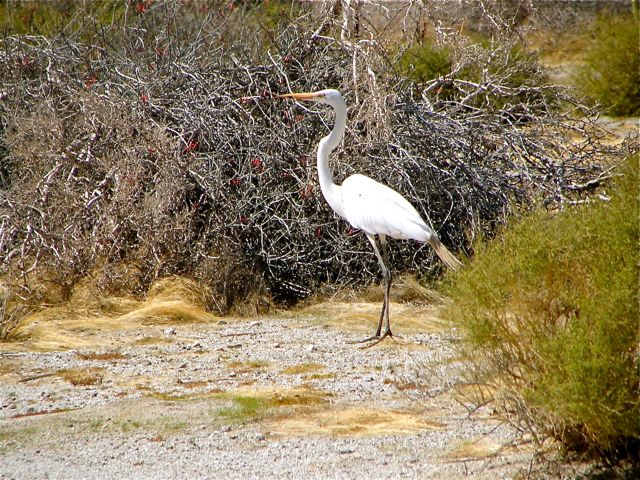
Though sightings are rare, waterfowl like this 3 foot (1 meter) tall Great White Egret (Ardea alba) can be seen in the Anza-Borrego Desert around springs and creeks. (Photo courtesy of Ann Irwin)
Resources
Anza-Borrego Desert
- Anza-Borrego Desert Natural History Association (ABDNHA)
- Desert USA
- Anza-Borrego.Net Blog (Travel & News)
- Anza-Borrego Foundation
- Anza-Borrego Desert State Park Paleontology Society
- Anza-Borrego Desert Wikipedia
- California State Parks: Anza-Borrego Desert State Park
- Anza-Borrego Desert Photos by Wild Nature Images (Ron Neibrugge)
- Sonoran Desert Flora & Fauna (an online field guide)
Anza-Borrego Desert Wildflowers
- Anza-Borrego Wildflower Reports from ABDNHA
- Anza-Borrego Wildflower Reports from Desert USA
- Arizona-Sonora Desert Museum Center for Sonoran Desert Studies Desert Wildflower Blooms
- Theodore Payne Foundation for Wildflowers & Native Plants of California
- Wildflower Reports & Hotline
Borrego Valley, California
2026
500kV Transmission Lines
2024
500kV Transmission Lines
2020
Regional Conveyance System
2017
Rudyville
Sahara Mustard
2015
Desert Renewable Energy Conservation Plan
Sahara Mustard
2014
500kV Transmission Lines
- Anza-Borrego Desert Call to Action!
- 500 kV Transmission Lines Threaten Anza-Borrego Desert State Park
Sahara Mustard